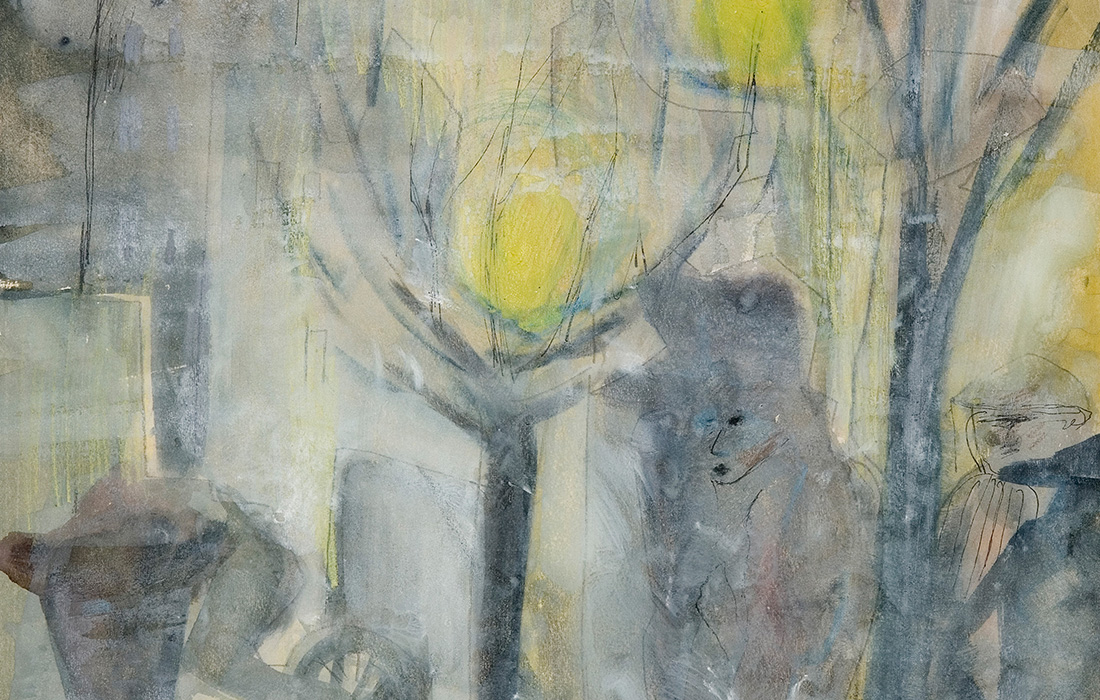
Witness how a generation of avant-garde artists and filmmakers transformed the uncertainty and trauma of post-World War I Germany into revolutionary work that continues to shape art and cinema today.
Drawing on their expertise in German art, experimental cinema, and visual culture, scholars Dr. Peter Chametzky and Dr. Susan Felleman, in conversation with Dr. Catherine Walworth, AMFA’s Jackye and Curtis Finch, Jr. Curator of Drawings, deepen our understanding of The Age of Anxiety: German Expressionism in Art and Film.
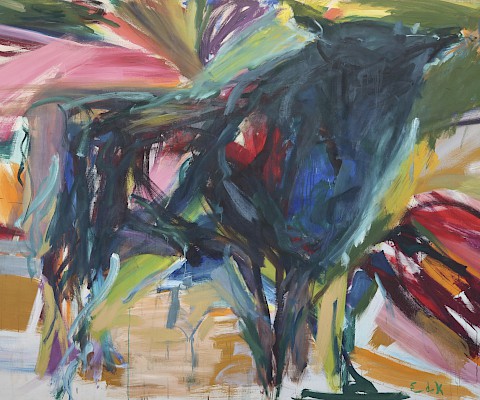
Through paintings, prints, sculpture, and film, they examine how artists used striking lines, bold colors, and distorted forms to create emotionally charged works that reflect the human condition and critique the social conditions of their time.
Art Insights: The Intersection of Art and Film is supported in part by Art Bridges.
The Age of Anxiety: German Expressionism in Art and Film is in cooperation with the Institute for Cultural Exchange and the Friedrich-Wilhelm-Murnau Foundation.
This exhibition is generously presented by Anne and Merritt Dyke.
Film Still of Metropolis, 1927, Director Fritz Lang, Screenplay Thea von Harbou, Fritz Lang (uncredited), Source: Friedrich-Wilhelm Murnau Foundation, Wiesbaden.
Since 1966, the Foundation has been dedicated to preserving, safeguarding and making accessible a substantial part of Germany’s culturally and historically significant film heritage. It was also responsible for the internationally acclaimed restoration – made possible by a spectacular discovery in Buenos Aires – which brought the almost complete original version back to light.
Peter Chametzky is professor of art history at the University of South Carolina’s School of Visual Art and Design. His research focus is modern and contemporary German art and culture.
He is the author of the books Objects as History in Twentieth-Century Germany Art: Beckmann to Beuys (University of California Press, 2010) and Turks, Jews, and Other Germans in Contemporary Art(MIT Press, 2021), a multicultural study of contemporary German art and culture, which won Honorable Mention for Germany’s 2021 Hans and Lea Grundig Prize.
His essays have appeared in such journals as Art in America, The Art Bulletin, Modern Intellectual History, The Massachusetts Review, and The Oxford Art Journal as well as in numerous anthologies and in exhibition catalogues for museums such as the Academy of Fine Arts, Berlin, the Harvard Art Museums, The Reina Sofia Museum, Madrid, The Schirn Kunsthalle, Frankfurt, a.M, and the Staatsgalerie Stuttgart.
His current book project for MIT Press is titled Visual Evidence: Art and the Specter of Air War, a history of artistic responses to aerial warfare from 1911 to today. A June 2026 essay, “Art-Life During Wartime: Notes on a Field Trip to Kyiv,” discusses his experience of conducting research for that book in an active air war zone.
In addition to teaching and writing art history, he was Director of the School of Visual Art and Design at the University of South Carolina for five years, Director of the School of Art and Design at Southern Illinois University Carbondale for four, and Interim Director of the School of the Earth, Ocean, and Environment at Carolina for two.
Susan Felleman is Distinguished Professor Emerita of Art History and Film and Media at the University of South Carolina. She is the author of four books: Botticelli in Hollywood: The Films of Albert Lewin (Twayne 1997), Art in the Cinematic Imagination (University of Texas, 2006), Real Objects in Unreal Situations: Modern Art in Fiction Films (Intellect 2014), and Screening Statues: Sculpture and Cinema, co-authored with Steven Jacobs, Vito Adriaensens, and Lisa Colbert (Edinburgh University, 2017)
She has produced two video essays, “Four Ways to Be a Woman Artist… According to the Movies,” co- authored with Hannah Shikle ([in]Transition, 2022) and “Hiding in Plain Sight: Blackamoors in Classical Hollywood Cinema” (In Media Res, 2024), as well as a feature-length, personal essay film, In Production: the Life and Career of George Justin, written and co-directed (with Hannah Shikle), an official selection of four film festivals in 2024-25.
Among her many essays, articles, and book chapters is “Ninotchka: Pleasure and Politics Objectified,” co-authored with Dr. Catherine Walworth, the Arkansas Museum of Fine Art’s Jackye and Curtis Finch, Jr. Curator of Drawings. It was published in A Light Touch: New Approaches to Ernst Lubitsch by Amsterdam University Press in 2024.
Dr. Walworth joined the Arkansas Museum of Fine Arts in 2022. She is a specialist in modern art whose research blends social and political history, material culture, fashion, early film, and dance. Walworth has brought her interests to bear by organizing AMFA’s exhibition Architects of Being: Louise Nevelson and Esphyr Slobodkina, which is currently on a national tour, and editing its accompanying catalog featuring new research and original scholarship on each artist.
Walworth’s other AMFA exhibitions include Path to Abstraction: Picasso, Braque, and Cubism’s Impact on Modern Art (2023-2024), Risa Hricovsky: Then is Now (2023-2024), Tricia Wright: The Naturalist (2024), and Kwame Brathwaite: The 1970s (2025). In addition to her curating, Walworth has stewarded new acquisitions for the AMFA Foundation Collection by artists such as Perle Fine and Sudarshan Shetty.
Prior to AMFA, Walworth served as curator at the Columbia Museum of Art, where she organized modern and contemporary exhibitions, including Renee Cox: SoulCulture (2017-2018), Jackson Pollock: Mural (2018–2019), and The Ironic Curtain: Art from the Soviet Underground (2021).
She began her career at the Seattle Art Museum, and has held curatorial positions supporting traveling exhibition and catalogue projects, including Silver to Steel: The Modern Designs of Peter Muller-Munk at Carnegie Museum of Art (2015); Artistic Luxury: Fabergé, Tiffany, Lalique (Cleveland Museum of Art, 2008); and High Drama: Eugene Berman and the Legacy of the Melancholic Sublime (McNay Art Museum, 2004).
She received a doctorate in art history from The Ohio State University, a Master of Arts degree from the University of Washington, and a bachelor’s degree in Art, History, and Medieval and Renaissance Studies from Cornell College. Her book Soviet Salvage: Imperial Debris, Revolutionary Reuse, and Russian Constructivism (Penn State University Press, 2017) was short-listed for a First Book Prize by the Modernist Studies Association in 2018. She also co-authored (with Dr. Susan Felleman) a chapter examining fashion, art, and objects in the 1939 MGM film Ninotchka in New Approaches to Ernst Lubitsch: A Light Touch (Amsterdam University Press, 2024).











 Peter Chametzky is professor of art history at the University of South Carolina’s School of Visual Art and Design.
 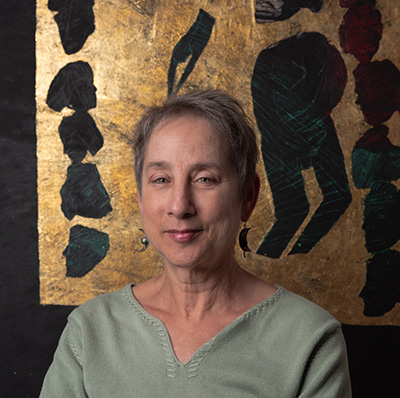 Susan Felleman is Distinguished Professor Emerita of Art History and Film and Media at the University of South Carolina. She is the author of four books: Botticelli in Hollywood: The Films of Albert Lewin (Twayne 1997), Art in the Cinematic Imagination (University of Texas, 2006), Real Objects in Unreal Situations: Modern Art in Fiction Films (Intellect 2014), and Screening Statues: Sculpture and Cinema, co-authored with Steven Jacobs, Vito Adriaensens, and Lisa Colbert (Edinburgh University, 2017)
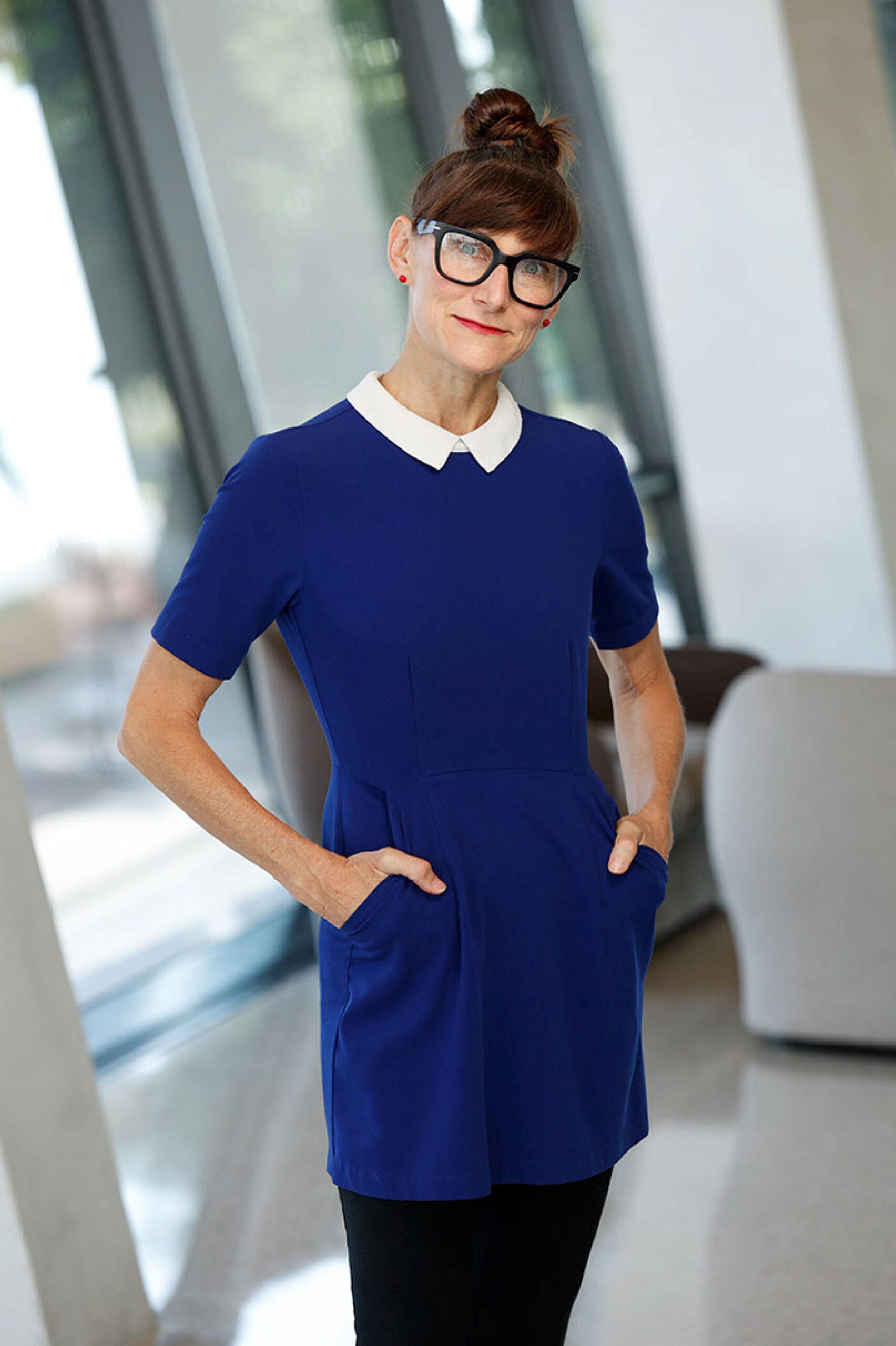 Dr. Walworth joined the Arkansas Museum of Fine Arts in 2022. She is a specialist in modern art whose research blends social and political history, material culture, fashion, early film, and dance. Walworth has brought her interests to bear by organizing AMFA’s exhibition Architects of Being: Louise Nevelson and Esphyr Slobodkina, which is currently on a national tour, and editing its accompanying catalog featuring new research and original scholarship on each artist.