


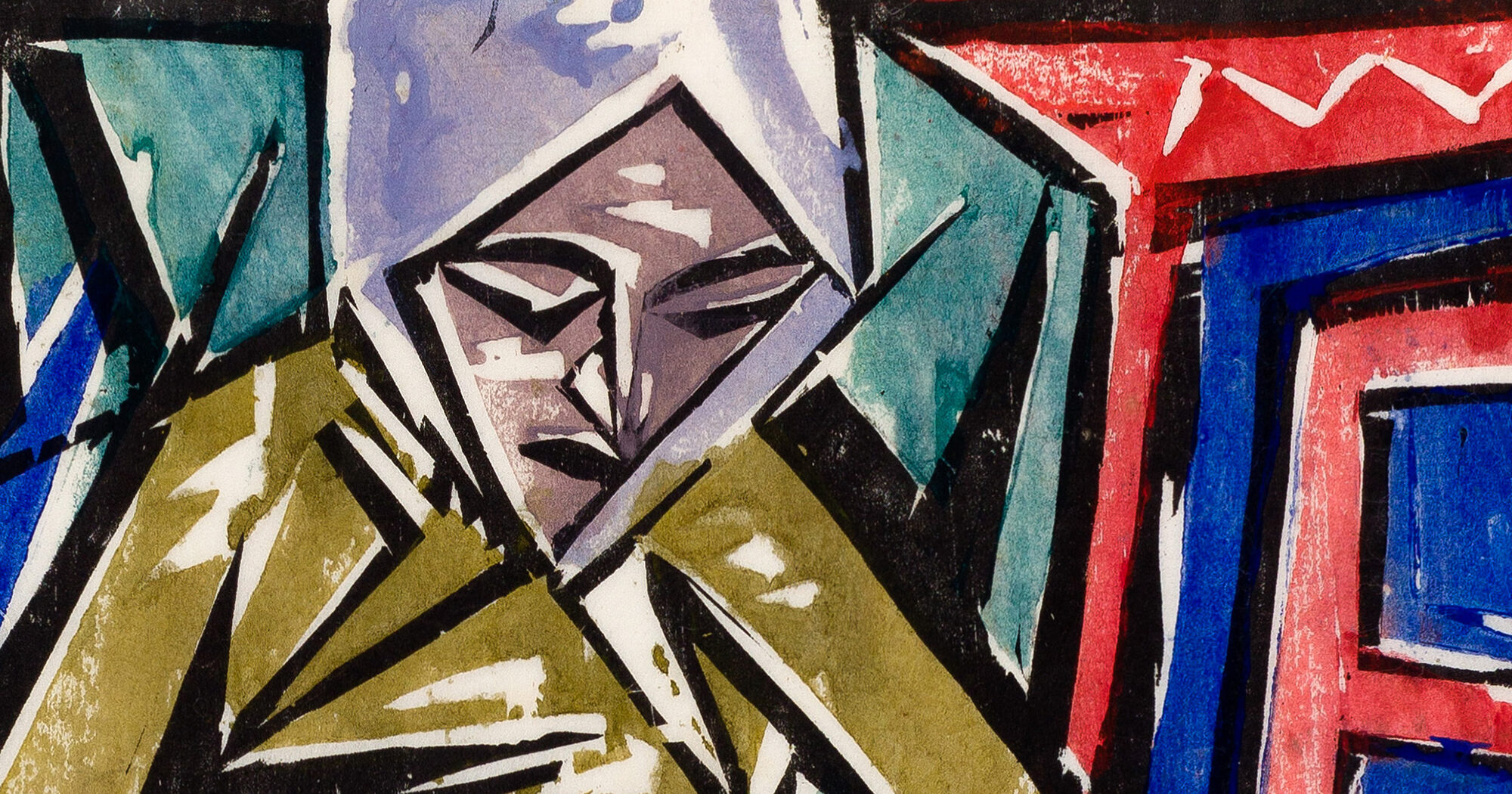
Otto Lange (Dresden, Germany, 1879 – 1944, Dresden, Germany), Frau – Ente rupfend (Woman – Plucking a Duck), 1917, color woodcut on paper, 23 1/4 x 19 in., On loan from the collection of the Willy Brandt House, Berlin.
The Age of Anxiety: German Expressionism in Art and Film
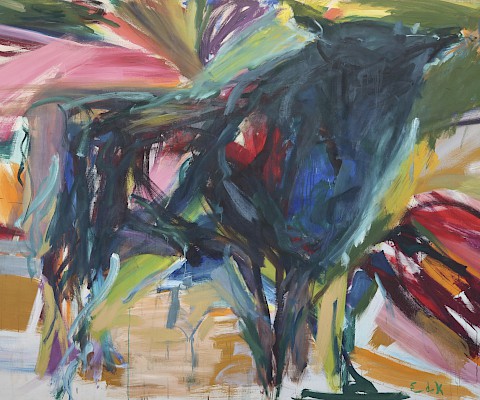
The Age of Anxiety: German Expressionism in Art and Film takes a bold new look at an extraordinary modern movement. Germany was in political and economic turmoil following World War I. Out of the chaos, prewar Expressionists found new subjects, creating unforgettable art with jagged lines, shadowy settings, and unsettling beauty.
While German Expressionists sought to outwardly reflect the energies and tensions of contemporary life, films of the 1920s took this to an imaginative new level, creating a new brand of horror and science fiction cinema.
In The Age of Anxiety, paintings, sculptures, and graphic works sit side by side with images from the era’s iconic films, including The Cabinet of Dr. Caligari (1920), Nosferatu (1921), and Metropolis (1927). Together, they form a startling visual outcry from one of the most pivotal eras in history, one whose legacy still impacts us today.
Sponsors
The Age of Anxiety: German Expressionism in Art and Film is in cooperation with the Institute for Cultural Exchange and the Friedrich-Wilhelm-Murnau Foundation.
The Age of Anxiety: German Expressionism in Art and Film is presented by Anne and Merritt Dyke.